THE "EASY JOB, HIGH PAY" TRAP: BEHIND THE SCREEN LIGHTS LIES DEBT THAT DESTROYS YOUTH.
Ngoại Thương News
Ho Chi Minh city, April 2nd, 2026
The clock struck 2 A.M. The only light in the cramped suburban apartment came from the computer screen and the flickering LED keyboard. A student slumped over the screen, facing a blank Google Docs document and a mind empty with panic.
Hai (The name has been changed due to privacy reasons) is a sophomore living away from home. Between the pressure of coursework and exhausting tutoring sessions, he's still half short of his rent for the month. That night, exhausted, he scrolled through posts on the Facebook group "Job Search," hoping to find a night job typing or data entry.
Just then, the screen of the phone next to him lit up. An SMS message from an unknown number had arrived:
"Hello, I'm the TikTok sales HR manager from company A. We are currently looking for online employees to work from home, anytime, anywhere, and receive their salary on the same day. You can earn between 500,000 and 3,000,000 VND per day. If you are interested, please contact me via Zalo:..."
Look at that message. It doesn't contain any threatening words. On the contrary, it hits the nail on the head for a student struggling with the pressures of making ends meet: "Work online on your phone," "Anytime, anywhere," and especially the numbers "500k-3 million VND/day."
For a student from a rural area studying in the city, 500,000 dong was equivalent to a week's worth of food and many evenings spent tutoring until his throat ached. Curious, Hai clicked on the Zalo link. On the other side, an account with a profile picture of a professional female office worker, polite and helpful, provided detailed instructions.
The first task was incredibly simple: Access the provided TikTok links, like them, and take a screenshot to send back. In just 10 minutes, Hai's phone vibrated. His banking app showed "150,000 VND added".
The initial suspicion vanished. The feeling of caution was completely overcome by the tangible flow of money."No scammer would send me money first! “That's it," Hai told himself. And that very thought pushed him across the line of the trap.
From the Dark Room to the Vortex of Manipulation
The next day, the "HR manager" asked Hai to download the Telegram app to work with a larger team. There, the job of liking posts ended, giving way to the "task of closing virtual sales."
To receive a 30% commission, Hai had to use his own money to pay for the orders. The first time he deposited 500,000 VND, he received 650,000 VND. The second time he deposited 2 million VND, he received 2.6 million VND. The feeling of victory and exhilaration flooded his brain, causing Hai to forget all safety rules. He didn't realize that the dozens of accounts constantly boasting about receiving money in that chat group were actually just "decoys"—digital ghosts programmed to create a bandwagon effect.
Until the "mission order" figure skyrocketed to 15 million VND.
Hai spent all his tutoring salary, borrowed more from classmates to deposit into his account, convinced he could withdraw both his principal and interest in a few minutes. But this time, the "ting" sound of the bank didn't ring out. Instead, there was a cold notification on the app: "Incorrect syntax. Account frozen. Please deposit an additional 15 million VND to verify your identity and disburse funds."
It's easy to blame victims like Hai for being greedy or naive. But in reality, these scams are run by people who are extremely knowledgeable about human psychology.
They don't demand 30 million upfront. They build trust with small amounts. They create a sense of scarcity ("VIP mission only has 2 slots left"). And their most terrifying weapon is attacking...regret(Sunset costs). Once victims have deposited an amount far exceeding their ability to pay, they will cling to any illusory hope the scammer paints, simply to "recover what they have lost."
Young people, especially students, are tech-savvy but lack the experience to deal with the subtle traps of society. The pressure to be independent and an overconfidence in their ability to "control the game" have inadvertently turned them into ideal targets.
And now is the time to equip yourself with the right defense. In the following interview, university student Huy Hoang shares his personal encounter with these deceptive tactics, while Foreign Trade University lecturer Hong Ngoc provides practical advice on how to recognize and evade such online employment fraud.
The light from the computer screen shone on the distraught face of the young student. His phone still lay on the desk, the SMS message advertising "Online work 500k-3 million VND/day" still there, silent but full of malice.
In the coming days, Hai will face the pressure of repaying debts, the constant calls from friends demanding money, and the torment of self-reproach. The most expensive lesson of his twenties has come at a very high price.
The internet can offer countless opportunities, but it also contains dark holes waiting to devour gullible souls. A legitimate job will pay you for your labor, never require you to pay to work. When temptation knocks in the guise of a seductive SMS message, the bravest and wisest thing you can do is simply: press Delete.
It's not due to a lack of knowledge, but rather a psychological blind spot.
To conclude the story
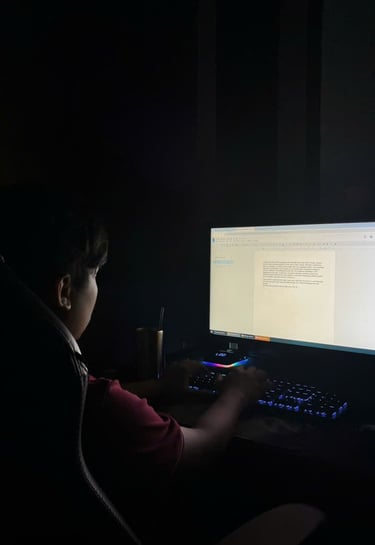
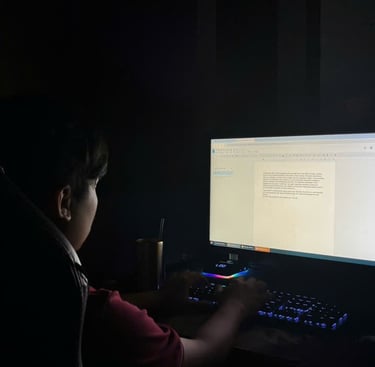
At that moment, in the dimly lit room, cold sweat broke out on Hai's forehead. The constant urging from the Telegram group chat had deprived him of his logical thinking. He tried borrowing from loan sharks to top up his account, hoping to recoup some of his losses. It wasn't until the amount he'd deposited reached 30 million dong and the "HR manager's" Telegram account suddenly vanished that Hai bitterly realised his money was nowhere to be found.
Huddled over his screen late at night to complete "tasks," the male student believes he is earning money for rent. He is unaware that he is actually throwing his entire tuition fee into a pre-programmed trap.
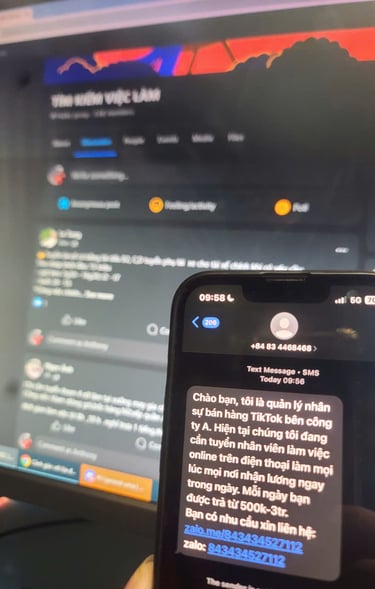
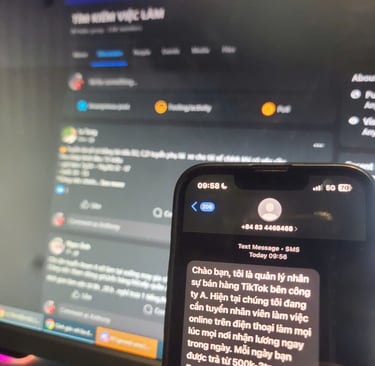
A seemingly harmless SMS offering "easy work, high pay" is the sweet-coated hook that begins a cruel psychological manipulation scheme targeting students strapped for cash.

Newsletter
Get the latest news directly in your inbox.