AJINOMOTO VIETNAM: WHERE "UMAMI" BLENDS WITH GREEN STRATEGY AND HUMAN DEVELOPMENT
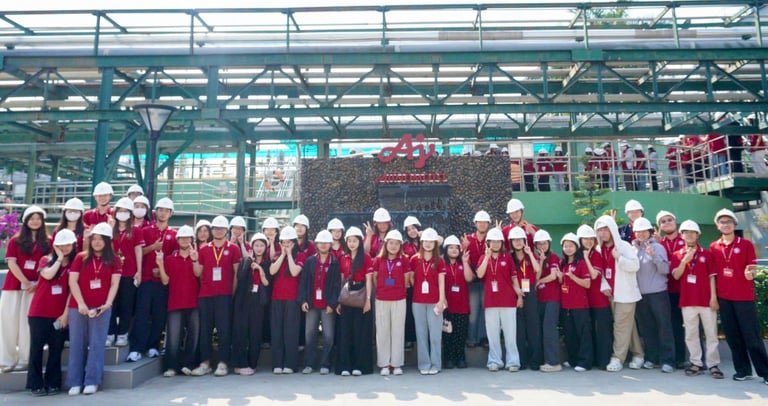
Foreign Trade University students excitedly check in at the artificial waterfall - a proof of Ajinomoto’s Grade A wastewater treatment system.
Ngoại Thương News
Bien Hoa, January 26th, 2026
When Ajinomoto is mentioned, most of us immediately think of the familiar MSG packet found in Vietnamese kitchens. However, the recent field trip of Foreign Trade University Students to the Ajinomoto Bien Hoa factory opened up a completely different perspective. It is not merely a spice manufacturing plant but an "ecosystem" that combines Amino Science, sustainable environmental technology, and a human-centric development strategy.
From a Century of History to the Mission "For Vietnamese Life"
The story began in 1908, when Professor Kikunae Ikeda discovered the Umami flavor, laying the foundation for the Ajinomoto brand in 1909. Over a century later, the group has grown robustly with 117 factories and 35,000 employees globally.
Decoding the 4 Pillars and the Philosophy "Pyramid"
In Vietnam, that journey began in 1991. With two major factories in Bien Hoa and Long Thanh (Dong Nai) and a workforce of 2,400, Ajinomoto Vietnam (AVN) goes beyond business. Their mission is encapsulated in the slogan "Eat Well - Live Well," realizing the commitment to bring health and happiness to the people of Vietnam.
All AVN activities rely on the solid scientific basis of AminoScience, revolving around four pillars:
Healthcare, Food and Wellness, Green Technology, and Information Technology.
To realize these pillars, AVN implements practical social projects:
School Meal Project: Improving nutrition for primary boarding students.
Mother and Child Nutrition Program: Caring for maternal and child health.
Sustainable Cassava Project: Supporting farmers in increasing productivity and income from raw materials.
One of the most impressive points of the trip was accessing the group's management philosophy model—the "compass" for every employee. The pyramid model is strictly structured:
Top (Purpose of Existence): Contributing to the health of people and Vietnamese society by providing quality products and valuable initiatives based on "AminoScience."
Middle (ASV - Ajinomoto Shared Value): Creating Shared Value—where economic benefits go hand-in-hand with resolving social issues.
Bottom (AGW - Ajinomoto Group Way): The cultural foundation based on creating new value, pioneer spirit, social contribution, and respect for people.
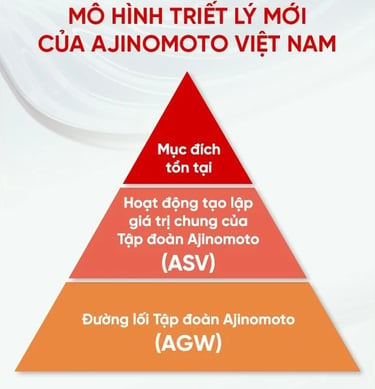

Ajinomoto's Philosophy Pyramid
Corporate Culture: Where People Are Central
One of the most impressive points of the trip was accessing the group's management philosophy model—the "compass" for every employee. The pyramid model is strictly structured:
At AVN, corporate culture is built on three key elements:
Purpose-driven culture: Employees do not work like machines; every activity revolves around the "Purpose of Existence." Each individual is aware that their work contributes to the health and happiness of the Vietnamese people.
Career Development: Promotion paths are divided into three clear branches:
Internal: On-the-Job Training (OJT), Job Rotation based on the Competency Framework (CPF).
External: Sponsorship for employees to attend skills enhancement training.
Overseas: As a multinational corporation, AVN frequently sends staff for training or work in Japan and other global branches. An interesting proof is that the company has dedicated HR staff specifically handling visa procedures, showing that this activity is very vibrant.
Well-being: This new HR trend focuses on "Prosperity": from periodic health checks and 24/7 insurance to mental care via Family Days and company trips.
MSG Production Process: From Farm to Seasoning
Technically, the process of creating MSG granules was summarised as a biological transformation chain:
From raw material, cassava, to extract starch, then undergo fermentation to produce sugar, followed by decomposition using Ajinomoto's proprietary microorganisms to produce Glutamate, and finally crystallising into the finished Ajinomoto MSG crystals.
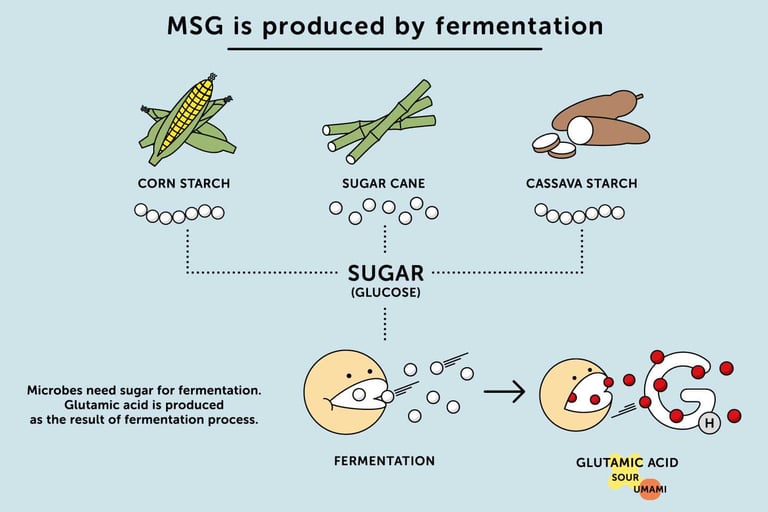
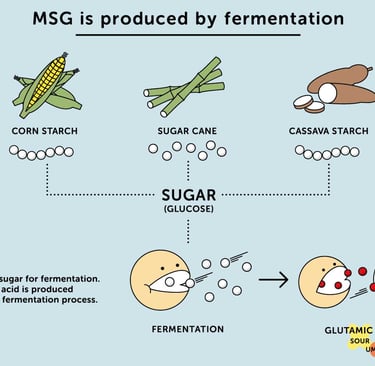
The Process of making MSG
"Witnessing" Green Process and Modern Technology
Leaving the meeting room, the group entered the field experience at production zones. The strongest impression was not the packaging lines, but the Wastewater Treatment and Recycling Zone.
Here, the story of "Green Technology" is no longer theoretical. Ajinomoto Vietnam invested in a modern wastewater treatment system to ensure production wastewater is strictly treated to Grade A standards before returning to the Dong Nai River, while solid waste is converted into bio-fertilizers, creating a sustainable circular loop.
Moving deeper into the factory, the group explored two core production areas with strong visual impressions:
MSG Production Zone:
The scale of this area truly overwhelmed viewers. We observed the miraculous transformation of simple agricultural ingredients—cassava (starch)—into the famous Umami seasoning. The "heart" of this zone lies in the massive, towering fermentation tanks, where microorganisms perform the biological task of converting sugar into Glutamate. The mixture then undergoes decolorization, crystallization, drying, and careful sieving to create the white, pure MSG crystals we see in kitchens. The entire process is monitored by a modern central control system to ensure absolute consistency and safety.
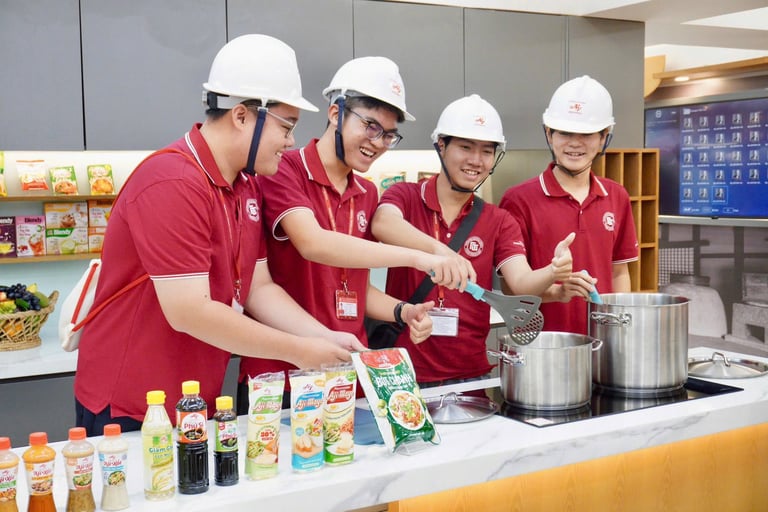
Students experiencing the 'Eat Well' spirit firsthand at the kitchen studio that lies inside the MSG Production Zone
Liquid Seasoning Zone:
In contrast to the grand stillness of the MSG tanks, this area was a display of speed and precision. We were captivated by the high-speed filling lines (for products like "Fuji" Soy Sauce, rice vinegar, Aji-mayo...). Thousands of bottles moved continuously on conveyor belts through filling, capping, labelling, and casing stations. The "dance of automation" here was truly impressive—machines handled almost every stage to boost production efficiency and minimize human contact, ensuring the highest level of food safety for the final products.
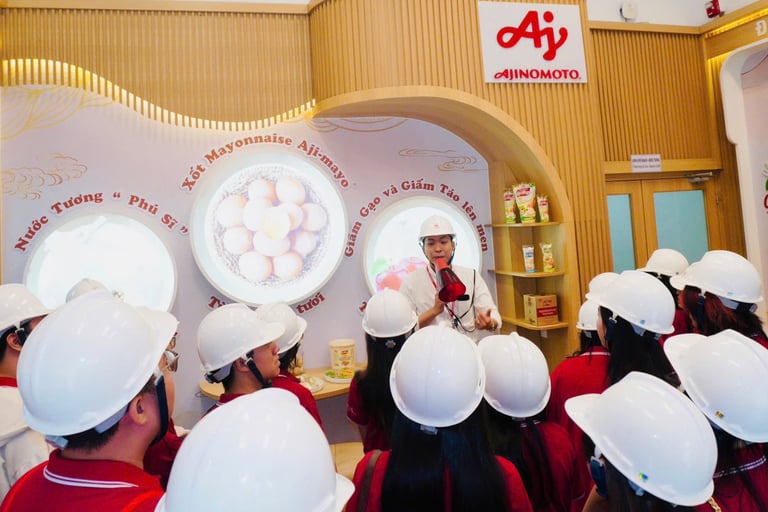
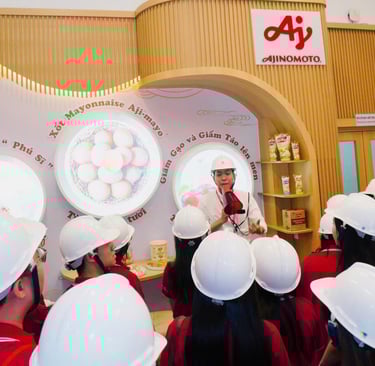
The group listening intently to the production process of liquid seasonings like Aji-mayo and 'Fuji' Soy Sauce.
From Hot Gyoza to the 'Secret' of Conquering Recruiters
The most elevated emotion was found at the final stop in the kitchen area, where Ajinomoto chefs treated the group to the famous Gyoza dumplings. A fragrant aroma filled the space as the dumplings were fried to a golden crisp, with a crunchy skin encasing a soft, sweet, and savory meat filling. Tasting the food prepared with the very spices we just observed on the production line, we truly know the full meaning of the "Eat Well" slogan the group pursues.
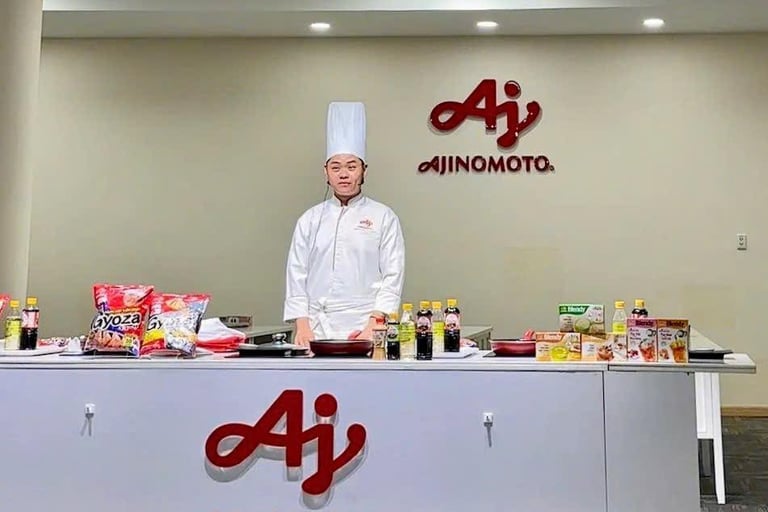
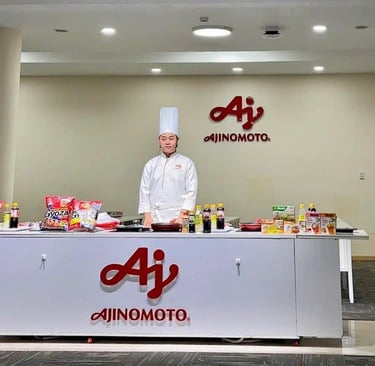
An Ajinomoto chef is showcasing the Gyoza product, demonstrating the practical application of the company's products.
However, the most valuable "main course" for the professional baggage of graduating students lay at the end of the program: The CV Suggestion Session.
This was a rare privilege where we could dialogue directly with the Human Resource (HR) department of a multinational corporation. My friends and I had sent our profiles beforehand and anxiously awaited the most "combat-ready" feedback. Not stopping at formatting or appearance errors, HR experts pointed out how to highlight personal strengths to fit the culture of a Japanese enterprise. Those frank and dedicated pieces of advice were truly valuable lessons that no textbook teaches, helping us feel more confident in the upcoming Career Development path.
Conclusion: More Than a Spice, It is Sustainable Thinking
The bus rolled away from the Bien Hoa industrial zone, closing the tour on January 26, but its echoes remain strong in every member.
We arrived with the mindset of learning the process of making an MSG granule, but the gift we brought back was a great lesson in sustainable development thinking. From the lush green circular wastewater treatment system and precise automated production lines to the dedication in every piece of career advice from HR... all painted a portrait of a business that doesn't just know how to do business, but knows how to "care": caring for taste, caring for people, and caring for the Earth.
Ajinomoto's "Eat Well - Live Well" mission turns out not to be just a slogan hung on the wall for show. It is a compass being realized in every beat of this factory every day, proving that: A business only truly reaches greatness when it knows how to place the community's interests at the centre of development.